
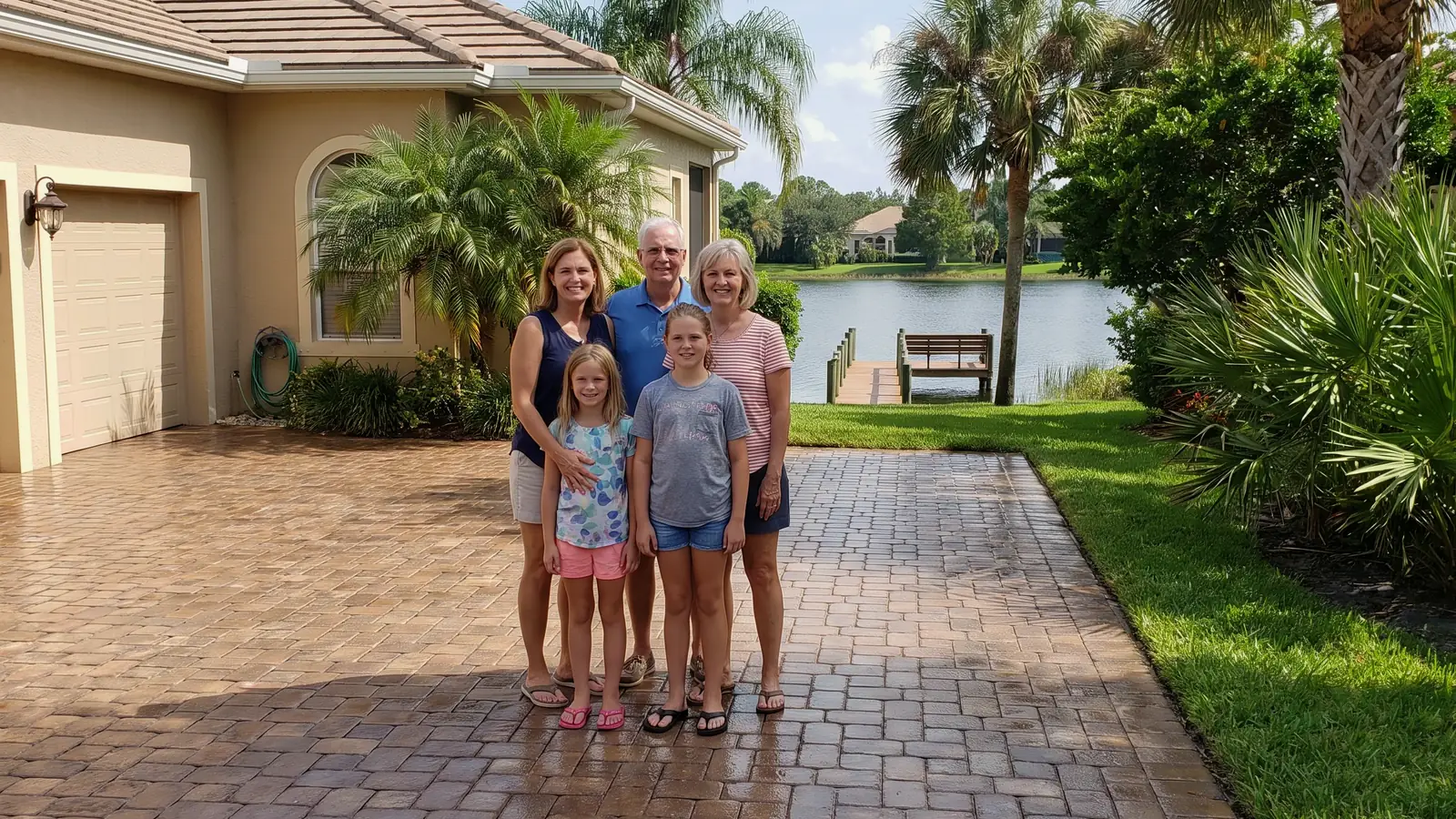
Paver sealing for Englewood homes
Paver Sealing in Englewood, FL
Englewood streets named for Chicago, from Dearborn to Yale, can get a free paver sealing estimate, so call (941) 214-2338.
- Brings out deeper paver color
- Fresh joint sand helps lock pavers in place
- Gives weeds less room to grow
- Makes the surface easier to keep clean
- Free estimate, no obligation
Request a Free Estimate
Free, no obligation.
Fast, careful paver sealing in Englewood
Paver sealing is available across Englewood, on both the Sarasota and the Charlotte side of the county line. The work covers washing, new joint sand and sealer on drives, pool decks and lanai floors, and you pay nothing for the estimate. When you call (941) 214-2338, an Englewood homeowner can expect to hear back within 1 business day, usually much sooner.
Maybe your pool deck has turned dull and gray, and the seams hold a thin green line. Clean, re-sanded and sealed, the same deck goes back to a single steady shade. If you would like to ask a question first, you can request a free estimate and describe the area. A photo or two speeds up the first answer.
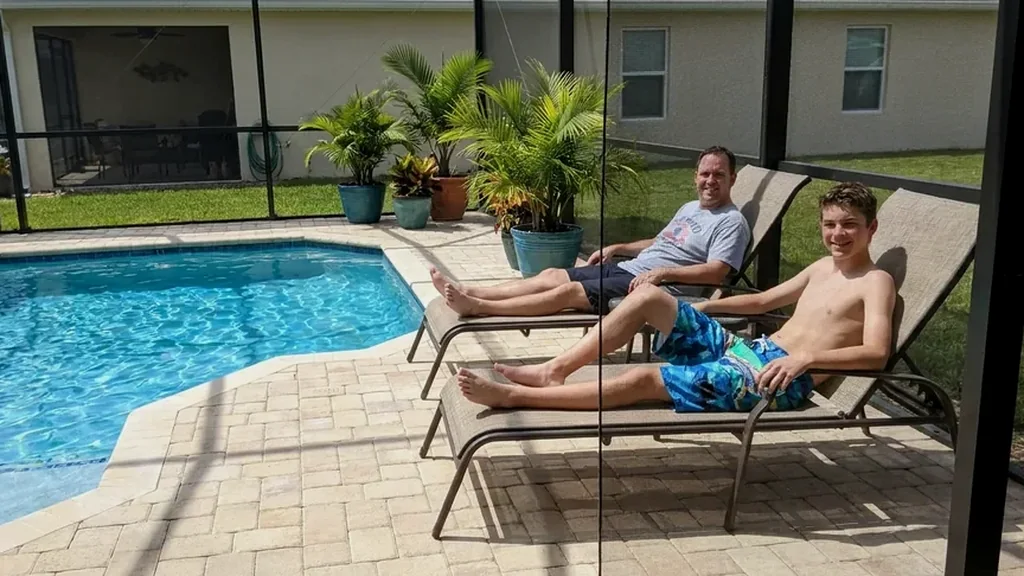
Why hire a local paver sealing contractor in Englewood?
Englewood pavers face salt on two sides, since Lemon Bay and the Gulf are both close. A local contractor plans for that, so request a free estimate and ask how.
A walk-through, free
The contractor looks over your Englewood pavers for free and tells you the price before you decide anything.
Posted prices as a check
Companies around Englewood post $1.50 to $3.00 per square foot for the wash, sand and seal. Use that to size up any bid.
A date that ends before you arrive
A local company counts about one Englewood unit in five as seasonal or occasional use. Ask for work that is cured when you return.
Free to say no
Pick the finish and the date. Hearing a price obliges you to nothing.
Get Your Free Estimate in Englewood
Tell us about your pavers in Englewood.
Free, no obligation
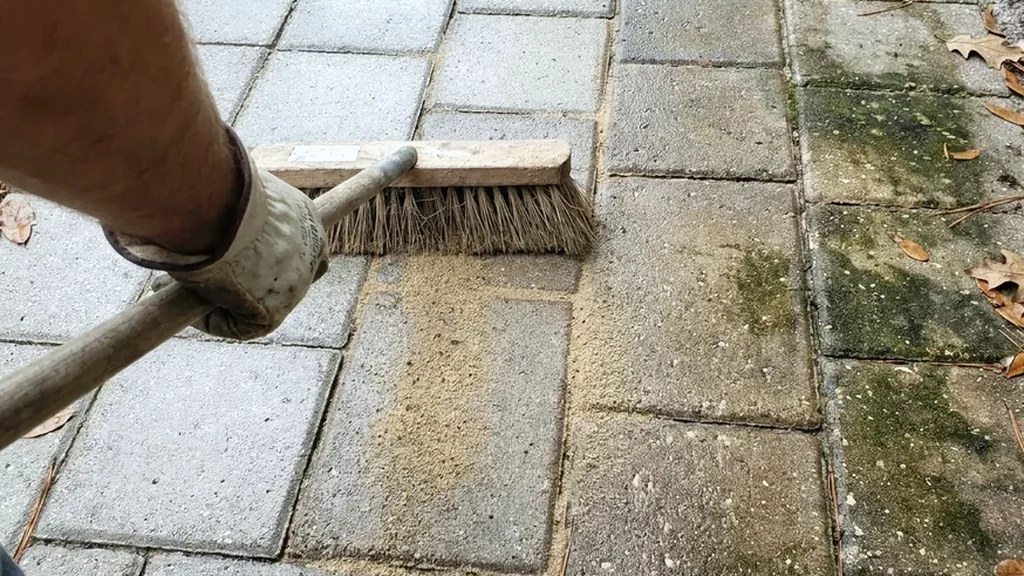
What paver problems show up most in Englewood?
Salt from Lemon Bay and the Gulf
Englewood sits between Lemon Bay and the Gulf of Mexico, and a local sealing company says salt exposure changes block by block. Lemon Bay covers 8,000 acres, and the Gulf is only a short drive west on Manasota Key. Salt and dirt can settle into unsealed pavers and dull them. A coat gives them a surface that rinses clean more easily. Decks and lanai floors close to the water tend to show it first. If your Englewood pavers look dull a week after a wash, salt film is a likely reason. Lemon Bay is fed by one Gulf pass, Stump Pass, so salt water moves in and out of the bay with the tide. Wind off the Gulf adds more. A coat means the next rinse takes salt away rather than leaving it in the pores.
Joints that empty on a sandy lot
Joint sand washes out in heavy rain, and Englewood gets plenty of it. The Southwest Florida rainy season runs from May 15 to October 15, with the heaviest rain in July and August. A widened seam fills with soil, and weeds root in it. Fresh sand and a sealed joint make those green lines harder to start. A driveway with sunken edges can hold a puddle too. Ask the contractor to look at where the water leaves your property. The original 1896 plat gave one-acre home lots, so many Englewood properties carry long drives and wide aprons. More paving means more seams to refill, and more places for weeds to start.
Several coats stacked up over the years
Many Englewood homes went up in the 1970s and 1980s, according to a local company citing Census counts, and owners tend to stay a long time. A driveway sealed again and again with different products can end up cloudy or peeling. A water-based product cannot bond over a solvent-based one. The contractor has to identify what is down before choosing a product. Peeling patches and a milky look are common signs. Guessing wrong means a failed coat.
Rust from irrigation
Extension specialists at the University of Florida note that iron is common in Florida well water. Orange streaks show up wherever that spray lands. A lanai or driveway beside a bed with sprinkler heads is the likely spot. A coat would trap the rust, so Englewood crews treat it before sealing. A first wash often reveals stains nobody had noticed. Swinging a sprinkler head toward the lawn keeps fresh rust off the stone. Lemon Bay Park and the preserve land nearby keep large stretches of mangrove and flatwoods close to many homes. Leaf litter and damp ground go with that.
Damp growth in shaded spots
A landscape industry source says moss and algae mostly need heavy shade and a surface that never dries. A pool deck wedge beside a hedge or a walk shaded by a tree fits that description. Growth like that returns fast if the pavers stay wet. Sealing helps, but the cause of the dampness still matters. The fix may start with trimming a branch or moving a sprinkler. The walk-through usually shows what is behind it.
Does it matter which side of the county line my Englewood home is on?
For the pavers, no. A contractor who serves Englewood works both sides, and the soil, the salt and the rainy season are the same. Englewood began mostly on the Sarasota side when the two counties were created in 1921 and now sits about equally in both. Tell the contractor your street when you request a free estimate.
The streets follow a Chicago grid, from Dearborn and Harvard to Yale, because three brothers from Englewood, Chicago platted the town in 1896. Home lots were one acre then, so some older lots are roomy, with long drives and deep yards. A bigger paver area means a bigger quote, so call (941) 214-2338 and say roughly how much driveway you have.
A local company's Englewood page counts thousands of homes from the 1970s and 1980s, plus a share of units used only part of the year. That mix means plenty of pavers that have sat through several seasons and a number of owners who travel. If you are away often, request a free estimate and mention your dates.
What does paver sealing cost in Englewood?
Around Englewood, companies post $1.50 to $3.00 per square foot for the wash, sand and seal. Salt film, lost sand, rust and old coats decide where an Englewood job lands in that range. Add a pool deck and a lanai to a driveway and the area, and the total, climbs. To get a number for your property, request a free estimate.
Access matters as well. A wide drive off a quiet street goes quickly, while a narrow side walk by a screened lanai takes more careful hand work. Salt on the bay side of town may add washing time. Phone (941) 214-2338, and the contractor will tell you which of these fit before any work begins.
| Paved area | Typical example | Clean, sand and seal |
|---|---|---|
| 300 sq ft | Small patio or walkway | $450 to $900 |
| 600 sq ft | Two car driveway | $900 to $1,800 |
| 1,000 sq ft | Large driveway or pool deck | $1,500 to $3,000 |
| 1,500 sq ft | Driveway plus pool deck | $2,250 to $4,500 |
Math based on the $1.50 to $3.00 per square foot that Southwest Florida paver companies publish. Your contractor sets the actual price after seeing the surface. Repairs, leveling and stripping failed sealer are usually extra.
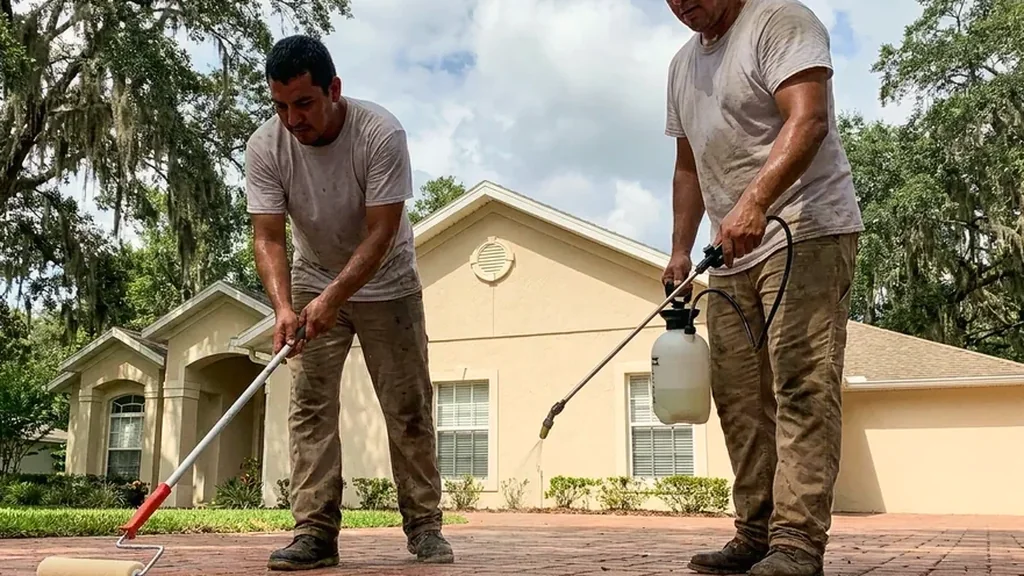
How does a paver sealing job work in Englewood?
Walk the property and ask about the last coat
The contractor starts with a walk around your Englewood pavers. Sunken or lifted spots are marked for repair, because sealer preserves any dip it covers. You are asked about any sealer used before, since water-based and solvent-based products do not mix. This is also the time to mention rust, salt or a spot that never dries. Snapshots of trouble spots make the quote clearer. In older parts of town, mention which year your house was built, because pavers beside a 1970s foundation may have been relaid.
Wash away salt, film and stains
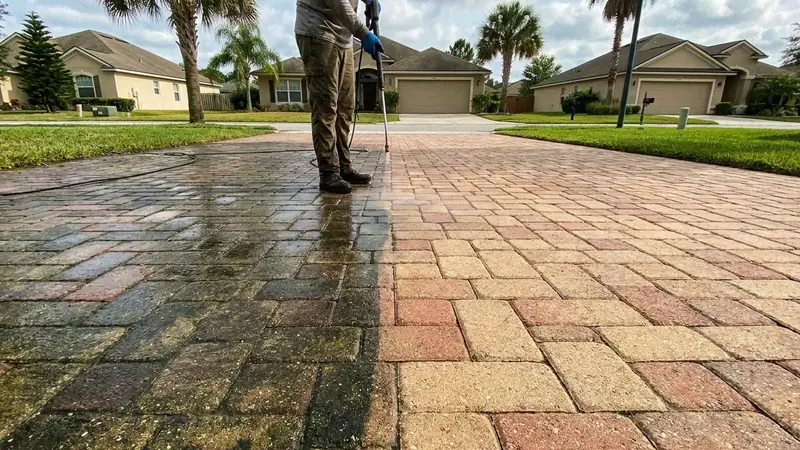
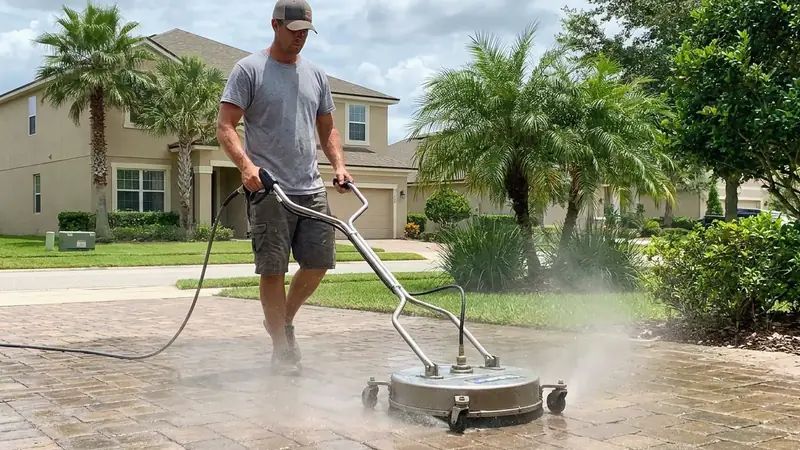
Washing comes next. Salt spray, green film and dirt are cleaned off, and rust marks are treated. Rinse water is kept away from screens, plants and the house. Anything left behind would end up locked under the new coat. Pool decks are washed with care for the water, and the pump is left alone. Tell the contractor about plants or pets that need protecting.
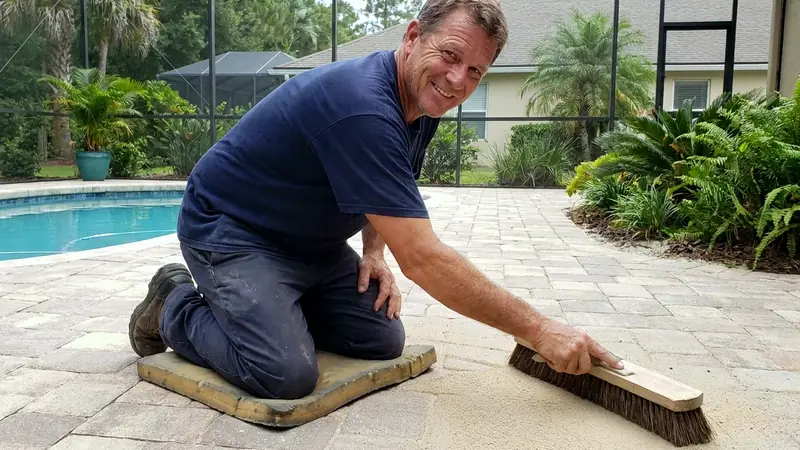
Refill the joints with sand
A wash pulls sand from the seams, so it goes back in before any sealer. Full joints keep the pavers locked together and give weeds less to hold. A sweep clears the surface after the sand goes in. Joint edges near the garage and the lanai get close attention. If joints were low for a long time, expect this step to take longer. Edge pavers stay put better with full joints beside them. Edges near the garage and the lanai get extra sand, since those joints lose it first. The sweep leaves the surface clear of loose grains.
Wait for a dry surface
Sealer needs a dry surface. In the wet season, mid-May to mid-October, an afternoon storm can push a job back. Shade slows drying under a hedge or an eave. Bay humidity means a patch can still be damp at noon, so each area gets its own dryness check.
Apply the sealer and plan the next coat
Then the chosen finish is rolled or sprayed on. Tires and chair legs mark a wet look faster than matte. Quotes for the gap between coats run two to five years, and homes on the salt side may sit near the short end. Ask for the product name in writing for the next round. Cars and feet stay off until the contractor clears the surface. A shower soon after application can mar the finish. If you are away part of the year, ask for the cure time in writing so you know when the drive is ready to use on your return.
Complete paver services in Englewood
How does an Englewood job go? A wash comes first and takes off salt film and dirt. Fresh sand then fills every joint, the stone dries, and the sealer goes on last so nothing is trapped beneath it. To ask how long each stage takes on your lot, call (941) 214-2338.
What surfaces do you have? Driveways pick up tire marks and sprinkler spray, pool decks pick up water, sun and chlorine, and lanai floors catch humid air under a roof. Walks carry foot traffic to the door. Name them when you request a free estimate, so the quote lists each with its size.
Which sealer should it be? Begin with the stone itself, since water-based and solvent-based products cannot be layered. Then choose a look: matte is quiet and hides scuffs, while a wet look adds depth to color but shows wear sooner. Call (941) 214-2338 to talk through your choice.
When should you seal? The weather decides, because stone must be dry. The wet season runs mid-May to mid-October, so many owners schedule for late fall through spring. If you leave town for the summer, request a free estimate and ask about finishing before you go.
Questions to ask before you hire
- How long does the sealer need before I can park a car on the driveway?
- Can you get rust stains from sprinklers out of my pavers before sealing?
- Do you rinse off salt spray and pool chemicals before the sealer goes on?
- Does the sealer you use leave a pool deck slick when it is wet?
- What does your insurance cover if something gets damaged on the job?
- Does the quote include re-sanding the joints after the wash?
- How often should the pavers be resealed in this climate?
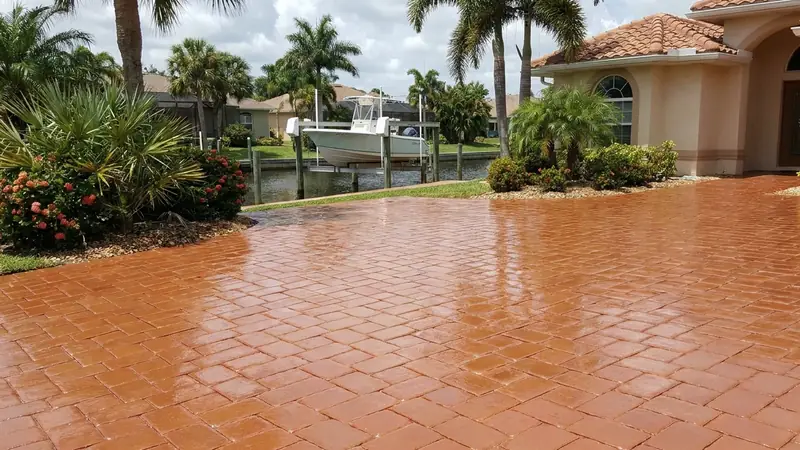
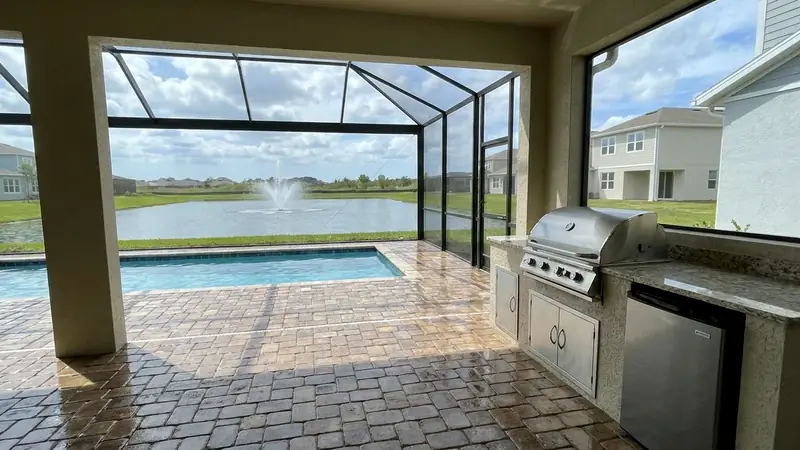
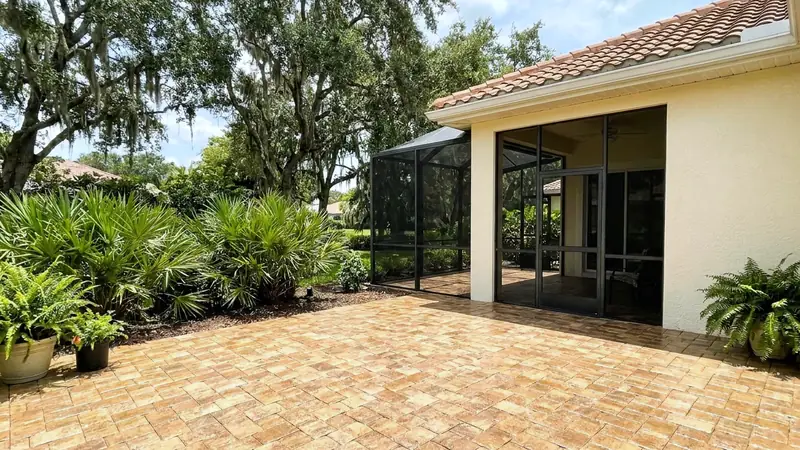
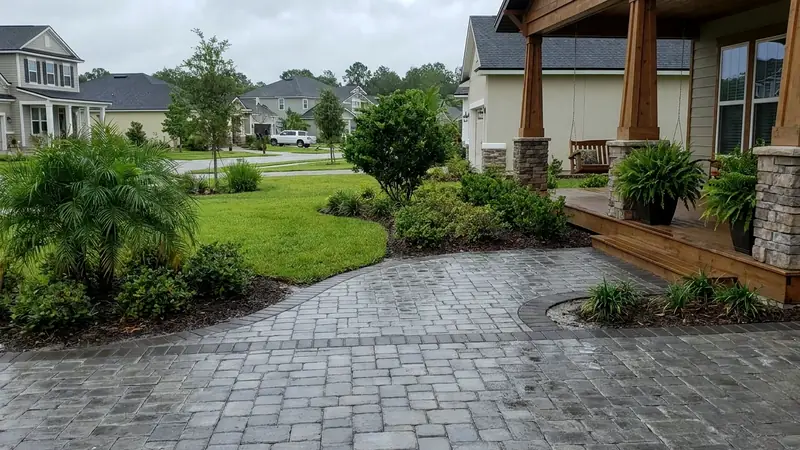
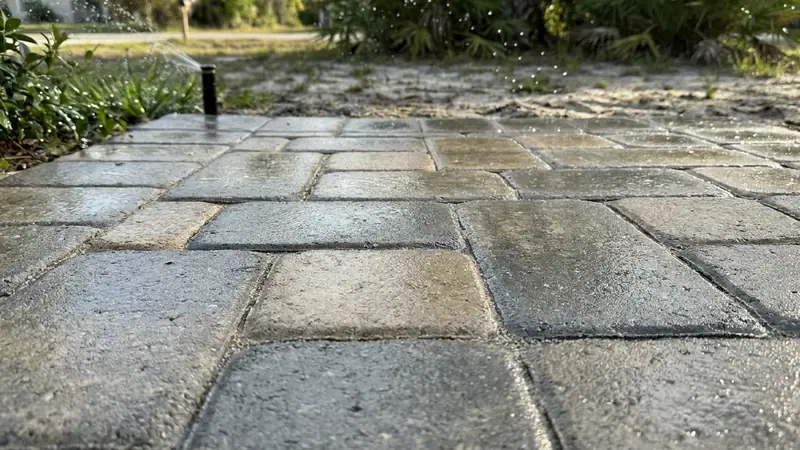
What do sealed pavers look like around Englewood?
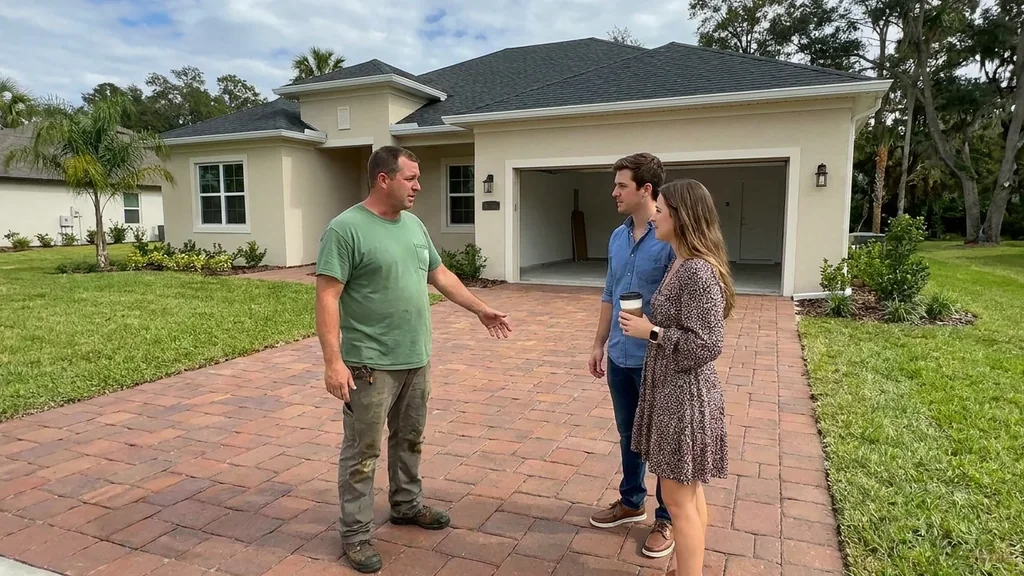
Why local matters in Englewood
A contractor who works Englewood knows that salt comes from two directions. Lemon Bay sits on one side, and the Gulf lies beyond Manasota Key on the other. That drives the wash plan and the recoat schedule. For a contractor who works Englewood regularly, call (941) 214-2338.
Local work also means knowing the owners. A large share of Englewood residents are 65 or older, and many homes stand empty part of the year. A local contractor can time a job before your trip, so a cured driveway greets you on return. You can request a free estimate and share your travel dates.
Englewood straddles two counties, which can confuse a stranger. A local contractor already knows both sides and the roads that connect them, from Dearborn Street to Beach Road. That cuts down on mix-ups about where to meet and what to bring. To confirm your street is covered, request a free estimate.
A local sealing company cites Census counts of 4,047 Englewood homes built in the 1970s and 3,773 in the 1980s. Homes of that age have had decades of sun, storms and repairs, so a contractor should ask when your pavers went in and what coat they carry. Streets such as Dearborn, Harvard and Yale, named by the developers who came from Chicago, can look alike from the curb, so the install date says more than the address. To share yours, request a free estimate.
Why does Englewood's history matter to a paver job?
William Goff arrived by schooner from Tampa in 1878, and a post office followed in 1895. The freezes of 1894 to 1896 wiped out many orange plants, so by 1897 fish was listed as the chief product, and a 16-room inn opened in 1898 for visitors from the north. If your yard has big old shade trees, ask for a look at the damp edges when you request a free estimate.
Today the water is the draw. Lemon Bay Park and Environmental Center covers about 210 acres with 1.7 miles of shoreline, and Beach Road crosses the bay to Englewood Beach on Manasota Key. Stump Pass Beach State Park sits at the south end of the key. Near any of these places, call (941) 214-2338 and tell the contractor how close the water is.
Frequently Asked Questions
What does it cost to seal pavers in Englewood, Florida?
Budget $1.50 to $3.00 per square foot for the wash, sand and seal, which is what companies here post. Your Englewood total depends on the area, salt film, sand loss and any old coat. Put the square footage on every bid. Ask for a line for each surface, so you can see what the drive costs against the lanai.
What should Englewood owners know about the downsides of paver sealer?
Expect to recoat as the sealer wears. Scuffs stay hidden longer under matte than under a wet look. And the stone must be dry, so a job in Englewood may slip a day in the rainy season.
Do you need a license to do pavers in Florida, and what should Englewood owners ask?
Licensing rules depend on the kind of work, so ask the contractor what applies to your job. Ask for proof of insurance too. An Englewood homeowner can request both in writing before agreeing to anything.
Is it good to seal pavers in Florida, and does it help in Englewood?
Yes for most homes, since a coat keeps dirt and moisture from soaking in. Near the bay and the Gulf, salt makes that protection more useful. The coat needs renewing every few years. If a spot never dries, mention it on the visit.
What is the average price for paver sealing near Lemon Bay?
Published prices around Englewood run $1.50 to $3.00 per square foot. Salt and shade can raise the work needed, and a big pool deck raises the total. A written quote with the area listed keeps it clear.
How does salt from Lemon Bay and the Gulf affect Englewood pavers?
Salt reaches Englewood from two sides, and a local company says exposure changes block by block. Salt film dulls bare pavers and clings to damp stone. A coat gives the surface something to rinse off, though homes closest to the water may need to recoat sooner. Where salt hits hardest, expect to check the coat first.
Can my Englewood pavers be sealed while I am away for the summer?
Yes. A local company says it schedules jobs so the driveway is sealed and cured before seasonal owners return. Share your travel dates when you request the estimate.
Why might an older Englewood driveway need extra prep?
Thousands of Englewood homes date to the 1970s and 1980s, per Census counts cited by a local company, so many drives have been sealed more than once. A mismatched coat can turn cloudy or peel. The contractor identifies the old product before anything new goes on.
Does it matter that Englewood is in two counties when I book sealing?
No. A contractor who works Englewood serves both the Sarasota and the Charlotte side. Give your street address when you request the estimate. Pool decks in Englewood often sit in full sun, so a finish that hides scuffs earns its keep.
How often do pavers in Englewood need a fresh coat of sealer?
Two to five years is the usual time between coats. Homes right on the water or under heavy sun may need the short span. A contractor can look at yours and give a view.
What does a wet look cost me in upkeep on an Englewood driveway?
A wet look deepens color, and it also marks up sooner under tires and chair legs. On a busy drive that can mean a tired look before the next coat is due. Matte hides the same wear for longer.
How do I choose a time of year for sealing in Englewood?
Pick a dry stretch. The rainy season runs May 15 to October 15, so many owners schedule for late fall through spring, after the summer storms end. Stone has to be dry for the coat to bond.
Ready for a Free Estimate in Englewood?
Call (941) 214-2338 and tell us about your pavers.
Free, no obligation