
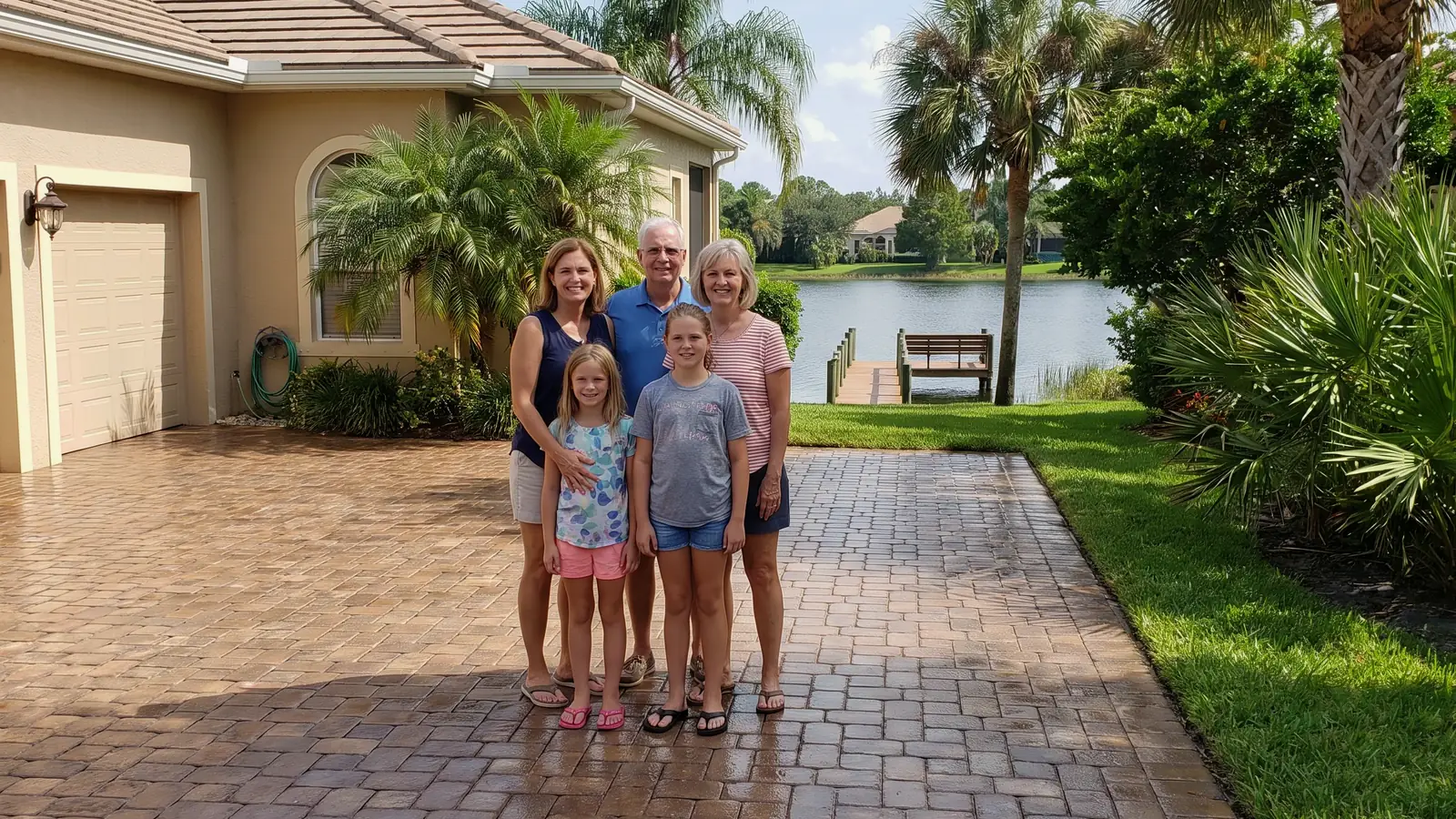
Paver sealing for Sarasota homes
Paver Sealing in Sarasota, FL
Sarasota pavers take bay air, hard sun and summer storms, so call (941) 214-2338 for a free sealing estimate.
- Brings out deeper paver color
- Fresh joint sand helps lock pavers in place
- Gives weeds less room to grow
- Makes the surface easier to keep clean
- Free estimate, no obligation
Request a Free Estimate
Free, no obligation.
Fast, careful paver sealing in Sarasota
Paver sealing is available across Sarasota, from the bayfront and the islands to the inland streets east of Tamiami Trail. Washing, new joint sand and sealer are all part of the job on drives, lanai floors, pool decks and walks. The first estimate is free. To request a free estimate, a short note is enough, and a reply arrives within 1 business day, usually much sooner.
Maybe a travertine pool deck has gone dull while the brick drive out front shows green in the joints. Different surfaces need different handling. A single visit can sort out which products each one gets and in what order. Call (941) 214-2338 and describe what you have.
Why hire a local paver sealing contractor in Sarasota?
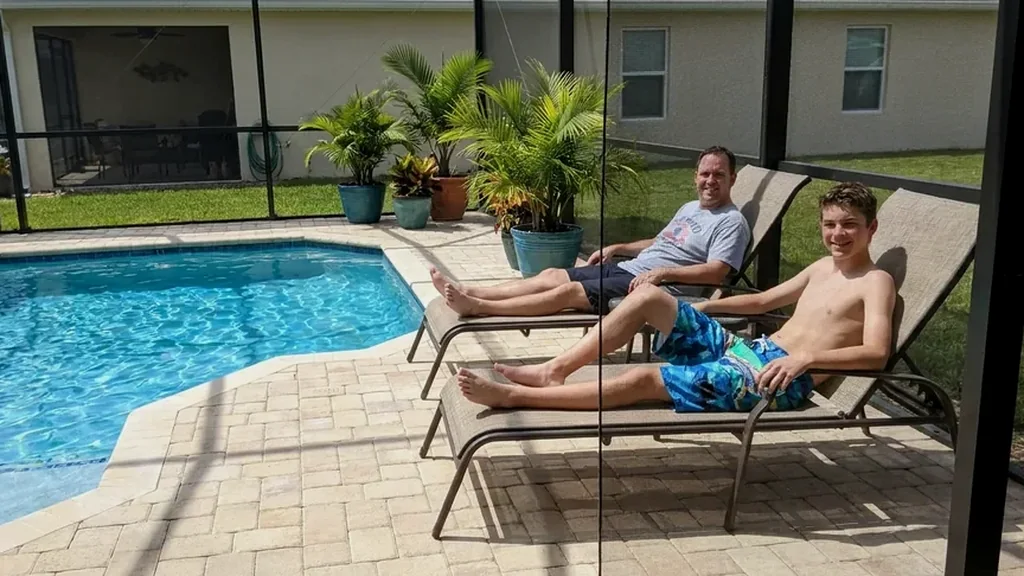
Sarasota runs from island condos to mid-century houses to big inland communities. A local contractor who works across that range can match each surface to the right product, so request a free estimate.
Free visit, written price
The contractor looks over your Sarasota surfaces at no charge. A price in writing arrives before any work is booked.
A yardstick for quotes
Companies across the region publish $1.50 to $3.00 per square foot, a handy measure for any bid in Sarasota.
Product per surface
Brick, concrete pavers and travertine do not share one sealer. Ask which product is planned for each of yours.
Your calendar rules
You choose the date and the finish. A Sarasota estimate does not obligate you to anything.
Get Your Free Estimate in Sarasota
Tell us about your pavers in Sarasota.
Free, no obligation
What paver problems show up most in Sarasota?
Salt air near the water
A Southwest Florida surface company says salt air on the barrier islands can cut sealer life close to half. Lido Key, St. Armands Key, Bird Key and part of Siesta Key sit inside Sarasota's city limits. If your pavers are near the bay or the Gulf, plan on checking the coat sooner than the usual schedule. A rinse of salt and grime before sealing helps the new coat bond. The company adds that regular sealing is upkeep on the islands, not an upgrade. Ask the contractor how often to recheck the coat each season. A short photo or note about how close you are to the water helps the quote. Lido Key and Bird Key sit right on the water, and the northern end of Siesta Key is also inside the city. The closer to the water, the more often the coat is worth checking. Ask what a rinse-and-recoat schedule would look like for your address.
Wet summers, slow drying
The NOAA figures shown for Sarasota give 49.05 inches of rain a year over about 112 days. June, July and August each bring 7 to 9 inches. The same surface company says from June into September pavers are either wet or drying and rarely fully dry. Green film settles in on damp surfaces. Sealer needs a dry surface, so summer jobs depend on the weather. A tired coat can go from thin to failed in that window, so a late-spring check can save a rushed fix in July. Mention any patch that never seems to dry, since that spot gets extra time. Sarasota's heat index often passes 100 degrees in summer, which stresses a coat as well. Hot, humid weeks leave shaded corners slow to dry and sunny ones quick. A single deck may be ready at different times.
Travertine that needs gentler care
The surface company says Sarasota homes commonly have travertine pool decks, and that travertine needs pH-neutral products and a penetrating sealer instead of a film. If your deck is travertine, ask what product the contractor plans to use. The wrong choice can mean a poor result on a surface that costs a lot to replace. Stone also soaks up water differently than a concrete paver. That is why one property can need two products in a single visit. Travertine pool decks look best when stone and joints are treated as a set. Ask whether the plan covers the sand between the stones as well as the faces. Ask how the contractor keeps cleaner out of the pool water, too.
Old brick with unknown coats
The same company says older neighborhoods near Southside Village and the downtown fringe hold original brick that has usually been sealed at least once. That means a past product is probably on the surface. Water-based sealer cannot go over solvent-based, so a contractor has to learn what is down. A cloudy or peeling patch is a clue, and a milky finish can come from low-grade product. Older brick near the downtown fringe often has a long coating history, so patience at the testing stage saves trouble later. Keep any old invoices or product names you find. Older brick near the downtown fringe may have been sealed more than once, and past products can show up as a patchy sheen. Low evening light often shows the pattern best, so look at your surface then.
Rust from sprinklers
Most Florida well water is high in iron, University of Florida extension notes, and sprinkler spray from it leaves orange stains. Sarasota lots with sprinklers close to a drive or walk can show it. Those marks need treating before sealing, since a coat would lock them in. Turning the spray head away helps prevent new stains. A contractor can tell rust from oil by sight, and each needs its own treatment. Rust on a light travertine deck shows quickly, so mention it early. Condo and rental properties often have their own irrigation schedules. If you manage one, ask the grounds team which zones run near the pavers and when. That detail helps the contractor plan the wash for a dry window.
Does sealing differ between Sarasota's islands and its inland streets?
Often, since salt air, access and surfaces change from the water to the mainland. A surface company says island driveways are short and access is tight. It also says salt exposure makes regular sealing maintenance rather than an upgrade. Mention an island or an inland street when you request a free estimate.
On the mainland, mid-century homes from the Sarasota School of Architecture were designed with open plans and large panes of glass for the climate. Patios and pool decks often sit right outside those walls. A finish that stays quiet beside clean modern lines is worth asking about. Call (941) 214-2338 and describe your home.
Rosemary District, Burns Square, St. Armands and the older blocks around Southside Village each have their own mix of brick, concrete pavers and stone. The Bidwell-Wood House, the oldest structure left in the city, shows how long people have built here. Mention what your surfaces are made of and how old they are when you request a free estimate.
What does paver sealing cost in Sarasota?
The published range in Southwest Florida is $1.50 to $3.00 per square foot for washing, sanding and sealing. Sarasota totals follow size and surface type. A brick drive and a travertine deck can take two products in one visit. To get a number for your surfaces, request a free estimate.
Salt, thick green growth, old coats and tight island access all add time. A rental may also need work set around guest dates. Phone (941) 214-2338 to hear which of these would apply at your address.
| Paved area | Typical example | Clean, sand and seal |
|---|---|---|
| 300 sq ft | Small patio or walkway | $450 to $900 |
| 600 sq ft | Two car driveway | $900 to $1,800 |
| 1,000 sq ft | Large driveway or pool deck | $1,500 to $3,000 |
| 1,500 sq ft | Driveway plus pool deck | $2,250 to $4,500 |
Math based on the $1.50 to $3.00 per square foot that Southwest Florida paver companies publish. Your contractor sets the actual price after seeing the surface. Repairs, leveling and stripping failed sealer are usually extra.
How does a paver sealing job work in Sarasota?
Sort the surfaces
The contractor starts by looking at each surface: brick, concrete pavers, travertine or other stone. Each one takes a different cleaner and sealer, so the walk-through decides the plan. Expect the contractor to press on loose stones and note where water collects. If a coat is already down, its type matters, since water-based cannot go over solvent-based. Mention how close the pavers sit to the water, which affects the salt rinse. Point out any rocking stones or low spots too, since sealer would preserve them as they are. Photos of the worst areas help the contractor plan. Bring any past invoices for sealing, since they can save a test patch.
Rinse off salt and stains
The wash removes dirt, algae, oil and rust. Salt gets rinsed off near the bay and the Gulf, and algae on shaded patios gets extra attention. Natural stone gets a pH-neutral product, not a harsh cleaner. Stone is not treated like concrete, since it needs its own products. Rinse water is kept off plants and screens where possible. Stubborn marks may need a second pass. A careful contractor tests a small spot before treating a whole deck. Pool water is protected from cleaner runoff by covering or diverting where possible.
Restore the sand between pavers
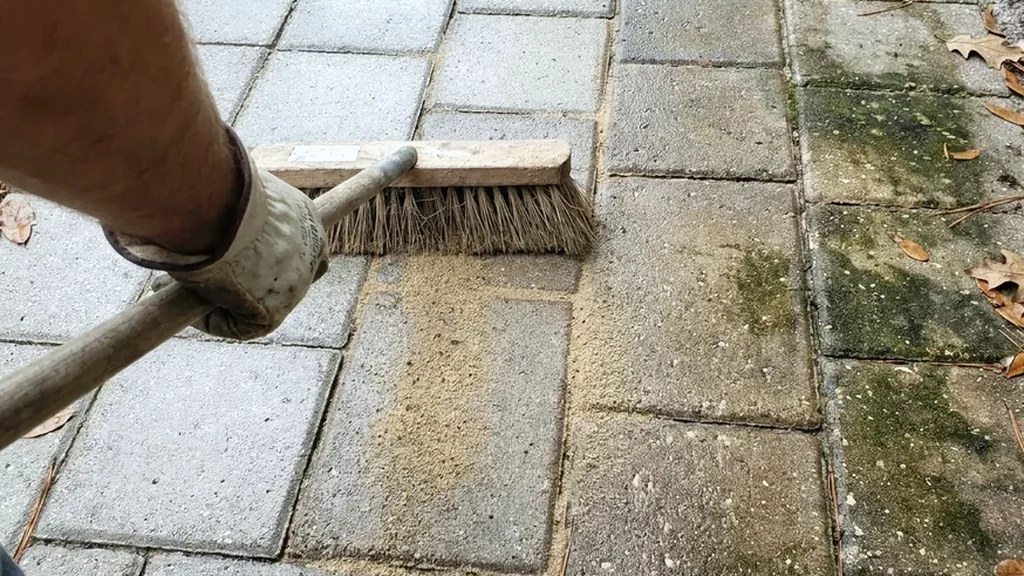
Washing pulls joint sand out, so it is replaced before the coat. Full joints keep the pavers steady and slow weeds. The surface is swept clean afterward. Travertine decks may have different joints, so the contractor sets that up separately. The sweep at the end keeps loose grains from ending up under the coat. Skipping that step can leave a gritty feel on the finished surface. Short island drives may need sand brought in by hand in small loads.
Let stone and brick dry
A Sarasota paver company says it typically takes one to two days after washing for pavers to be dry enough to seal. Sealing damp pavers lowers protection and can hurt durability. In the wet months, the contractor watches the forecast and waits for a clear window. Waiting is a normal part of summer work in this city. Shaded patios take longest. A day lost to clouds costs less than a coat that turns cloudy and has to be stripped. Early starts give the sealer more hours to set. Shade from buildings can make one side of a courtyard dry hours after the other.
Match sealer to material
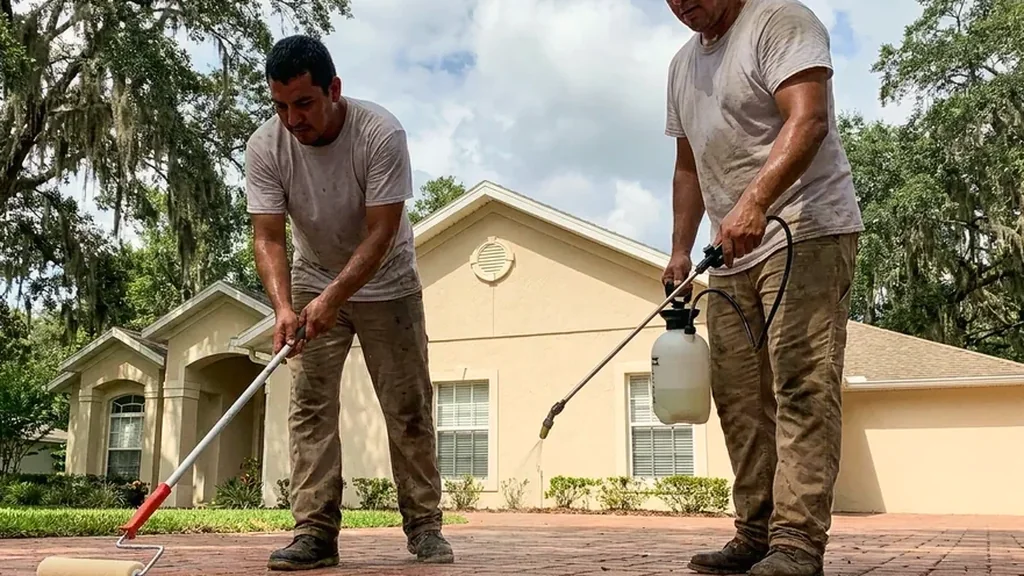
Then the sealer goes down in the finish you picked for each surface. Water-based acrylic is breathable and suits Florida weather, according to a Sarasota company, which also says sealing guards against UV discoloration. Stone gets a penetrating product, not a film, so it can still breathe. Matte hides scuffs better than wet look, and companies commonly quote two to five years between coats. Ask for the product name and the number of coats in writing, then keep that note for the next round. A final walk-through lets you see the finish in daylight before you sign off.
Complete paver services in Sarasota
Sarasota jobs begin with a look at each surface, then a wash, fresh joint sand, a dry period and the coat. Every material gets its own product. Sealer is last so grime never ends up beneath it. Call (941) 214-2338 to ask how long those steps take at your property.
Think of your property as a set of surfaces. The drive takes tires and sun, the lanai floor stays damp and the pool deck sees bare feet, so grip matters there. Bay air adds salt near the water. List what you have and where it sits when you request a free estimate.
Brick and concrete pavers often get a water-based film, while natural stone gets a penetrating product instead. A cheap sealant can leave a milky look, so ask for the product name before work starts. Call (941) 214-2338 to compare finishes for your house.
Rain arrives from March to November, with summer the wettest stretch, so Sarasota dates can slide. December through February is the dry season and the easier window. For help picking a window that suits your property, request a free estimate.
Questions to ask before you hire
- Do you rinse off salt spray and pool chemicals before the sealer goes on?
- Will you list the sealer brand and the price per square foot in writing?
- Is the sealer a film-forming finish or a penetrating one, and which suits my pavers?
- Can you match a wet look or a natural look, and test a small spot first?
- Does the quote include re-sanding the joints after the wash?
- How do you protect my screen enclosure, lanai and plants from overspray?
- How long does the sealer need before I can park a car on the driveway?
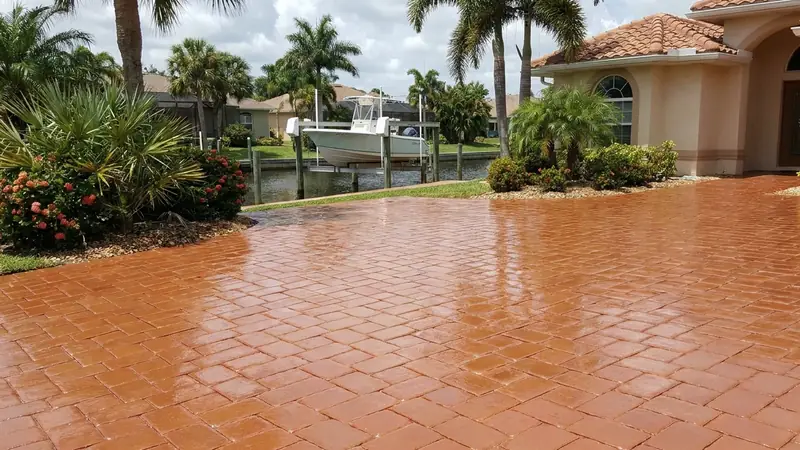
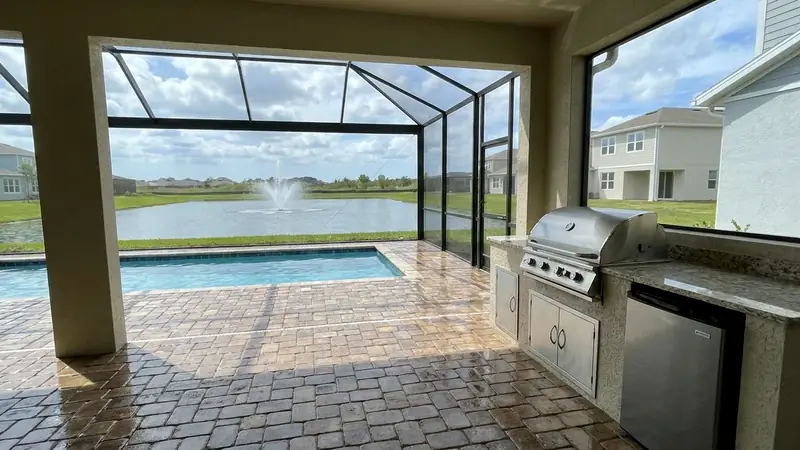
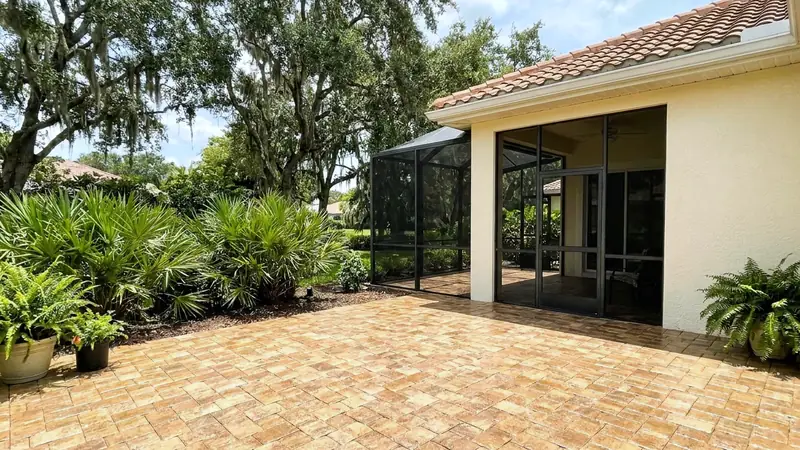
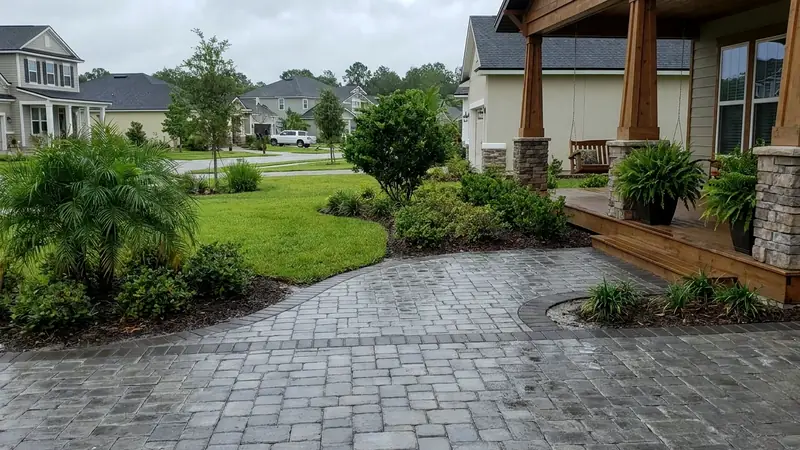
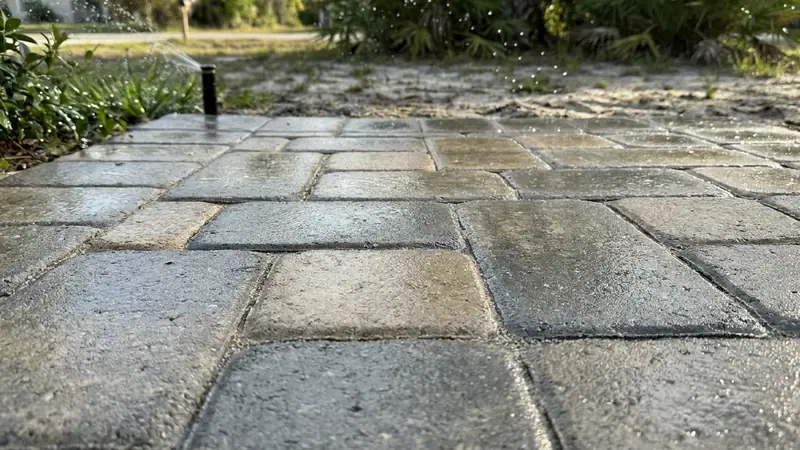
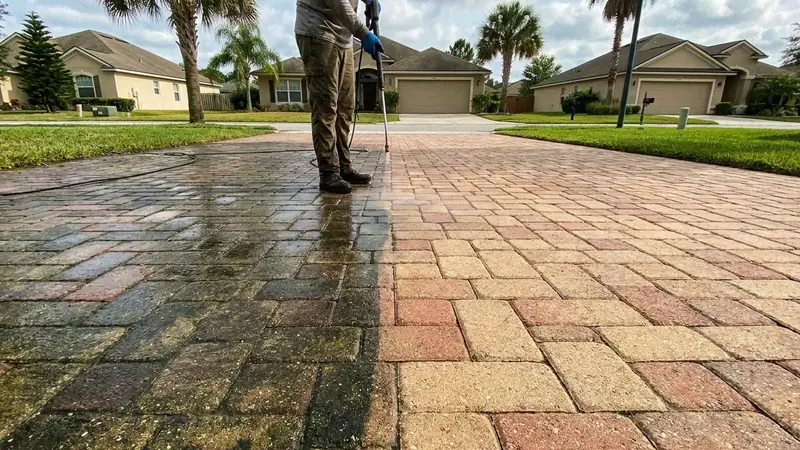
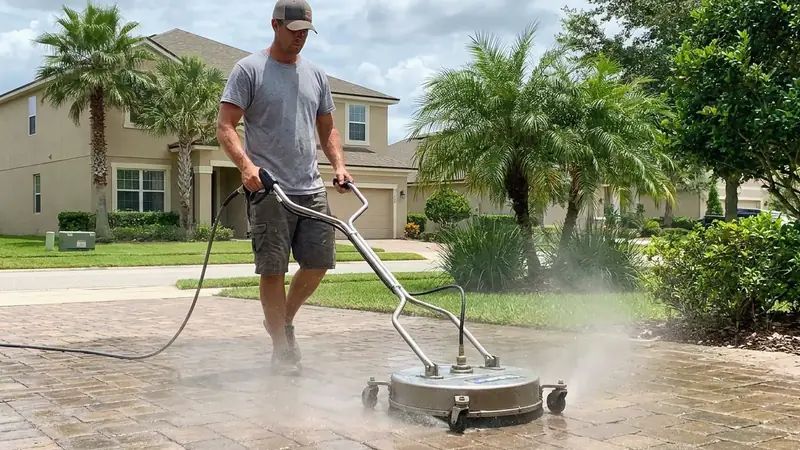
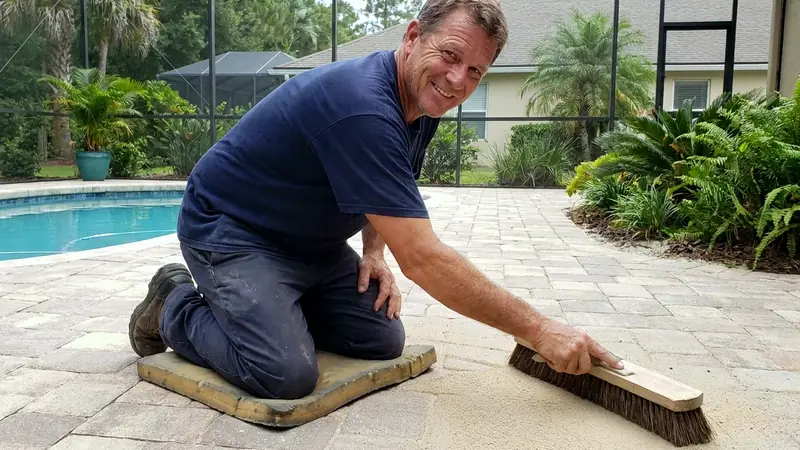
What do sealed pavers look like around Sarasota?
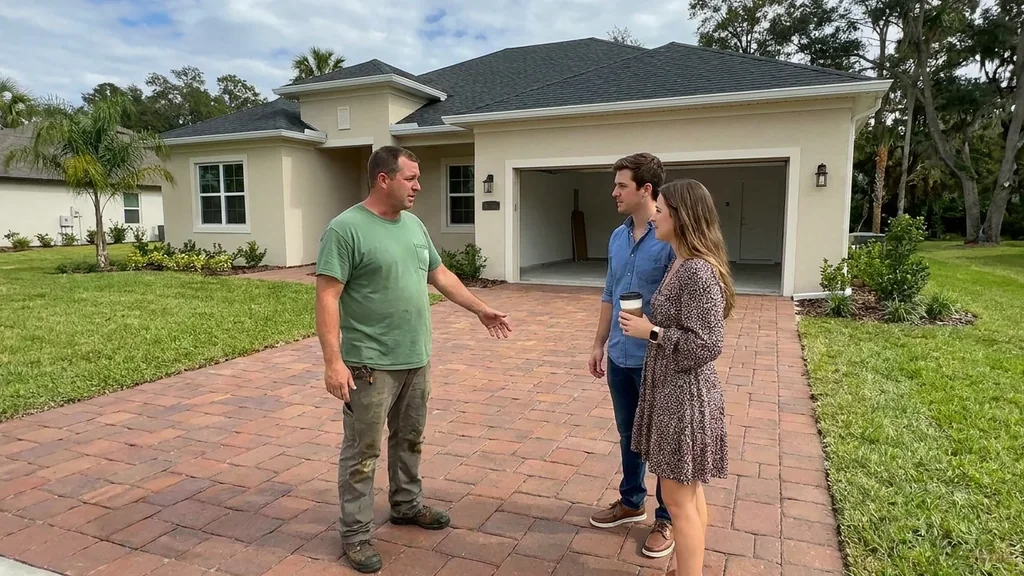
Why local matters in Sarasota
An island condo and an inland ranch house in Sarasota need different plans. Salt, shade, access and surface type all change from block to block. A contractor who works the whole city sees that coming. Call (941) 214-2338 to reach one.
Rentals and tight driveways are part of local life too. Rental decks take heavy foot traffic and frequent rinse-downs, and island drives are short. A contractor used to this plans work between guests and keeps the road clear. To ask how that works, request a free estimate.
Houses here run from older brick to mid-century modern to Italian-style. Whoever sealed them before may have used a different product on each. Describe your home's age and surfaces when you request a free estimate, and nothing obligates you to hire anyone.
The 2020 census counted 31,366 housing units in Sarasota, and 19.8 percent of them were vacant. A house that sits closed for part of the year still takes the same sun and storms, so pavers wear whether or not anyone is home. If you are away for months, ask how the work can be timed around your return, then request a free estimate.
Why does hiring someone who knows Sarasota make a difference?
Sarasota has layers of history, and its surfaces show them. Sarasota was incorporated as a town in 1902, became a city in 1913 and the county seat in 1921. Ca' d'Zan reflects Venetian styling, and the Sarasota School of Architecture shaped mid-century homes. If your house is from one of those eras, request a free estimate.
The bayfront and parks give the city its landmarks. Selby Gardens runs two campuses on the bay, Nathan Benderson Park holds a rowing course, and the 1937 Municipal Auditorium still draws crowds. Lido Key, St. Armands Key and Bird Key sit within city limits. Mention the nearest landmark when you call (941) 214-2338.
Frequently Asked Questions
Can you seal outdoor pavers in Sarasota?
Yes, driveways, lanai floors, pool decks and walks can all be sealed. The surface has to be clean and fully dry first. The product depends on the material. Brick and concrete pavers often take a water-based film, while travertine needs a penetrating stone sealer. A cheap product can leave a milky finish, so ask what will go on your surface.
How much does it cost to have your pavers sealed in Sarasota?
Figure $1.50 to $3.00 per square foot to wash, sand and seal, in line with prices published across Southwest Florida. A short island drive costs far less in total than a wide inland drive. Ask for the area and the sealer name in writing. A written quote that lists coats and surfaces makes bids easier to compare.
How much does it cost to have pavers cleaned and sealed in Sarasota?
The same range covers the wash, the new sand and the sealer, since they are done as one job. Heavy growth, old coats and stone surfaces can add time. A free estimate shows the figure for your own pavers. The contractor can measure the drive, the lanai and any walks in one visit.
How often should pavers be resealed in Sarasota?
Expect one to five years, the range a Sarasota paver company gives for Florida. Many companies in the region quote two to five years between coats. Salt air near the water can shorten that, since a surface company says it can cut sealer life close to half.
Does salt air near the bay change how pavers are sealed?
It can. A surface company says salt air on the barrier islands wears sealer faster, so island pavers need regular upkeep. The contractor rinses salt and grime off first. Ask how often the coat should be checked at your address. A quick look each spring is a simple habit, and it catches thin spots before the wet season starts.
Do travertine pool decks need a different sealer?
Yes. A surface company says travertine needs pH-neutral cleaners and a penetrating sealer rather than a film. Ask the contractor which product goes on your deck, and ask it before the work starts. A test spot in a corner shows how the stone reacts before the whole deck is treated.
How long after washing can pavers be sealed in Sarasota?
They need to be fully dry, which a Sarasota company says typically takes one to two days. Sealing damp pavers lowers protection. In the wet summer months, expect the date to depend on the forecast. Shaded areas dry slowest, so the contractor may seal sunny sections first.
Can sealing be scheduled around rental guests?
Often yes. A surface company says rental decks on Siesta Key are worked on between bookings when the owner gives a window. Share your guest calendar when you request the estimate. The contractor can then suggest a window that leaves the surface dry before the next arrivals.
Ready for a Free Estimate in Sarasota?
Call (941) 214-2338 and tell us about your pavers.
Free, no obligation